Introduction
The Inner Dharma writing project started not because of my practice of martial arts but because of my interest in Shugendō, a blend of Buddhism, Taoism, and mountain asceticism practiced in Japan.
Visiting sacred places has been an important component of my martial arts training over the years. It was while visiting the Dewa Sanzan area, including Gassan Dai Jinja (月山大神社) on Mt. Haguro and the Haguro-san Kōtakuji Shōzenin (羽黒山荒沢寺正 善院) Kogane-dō in Haguro-machi associated to Haguro Shugendō, that I decided to focus my efforts on a practice of classical and traditional arts.
Haguro means "black wing" — it alludes to the giant yatagarasu (八咫烏; eight-span crow), an important symbol in Japanese mythology. Yatagarasu is associated with divination and divine guidance, and sometimes is depicted with three legs, symbolizing the ten-chi-jin (three powers of heaven, earth, and humanity). In Chinese mythology, the three-legged crow is said to live in the sun (日), which is written with three horizontal lines.
2026 Update
Much more information is now available about practices like Shugendō. I recommend those interested in Shugendō to first read Ishizuchi-san on Western Mikkyō. Those interested in practice in the west would do well to visit karunamitra.org for an attempt to correct misconceptions about the tradition.
Haguro Shugendō
The goshin-jutsu school I trained at in NYC maintained a set of spiritual practices that it claimed were drawn from Shugendō associated to Mount Haguro in Japan — this claim was suspect.
Some sources state that Takeda Sokaku's grandfather Takeda Soemon had been trained in Haguro Shugendō — Takeda Sokaku himself was known to have gone on refuge in the sacred mountains of Dewa. This has intrigued many people over the years, especially Aikidōka interested in Daitō-ryū.
Shugendō had a strong philosophical influence on many classical Japanese martial arts. However, there are very few yamabushi related martial traditions surviving in Japan. Today, people will sometimes attempt to use mountain religion as a backstop for their practice because of its poetic allure (taking refuge in the mountains) and also because there is not as much public information available in English compared to other Japanese religions such as well-known Shintō shrines or Buddhist complexes.
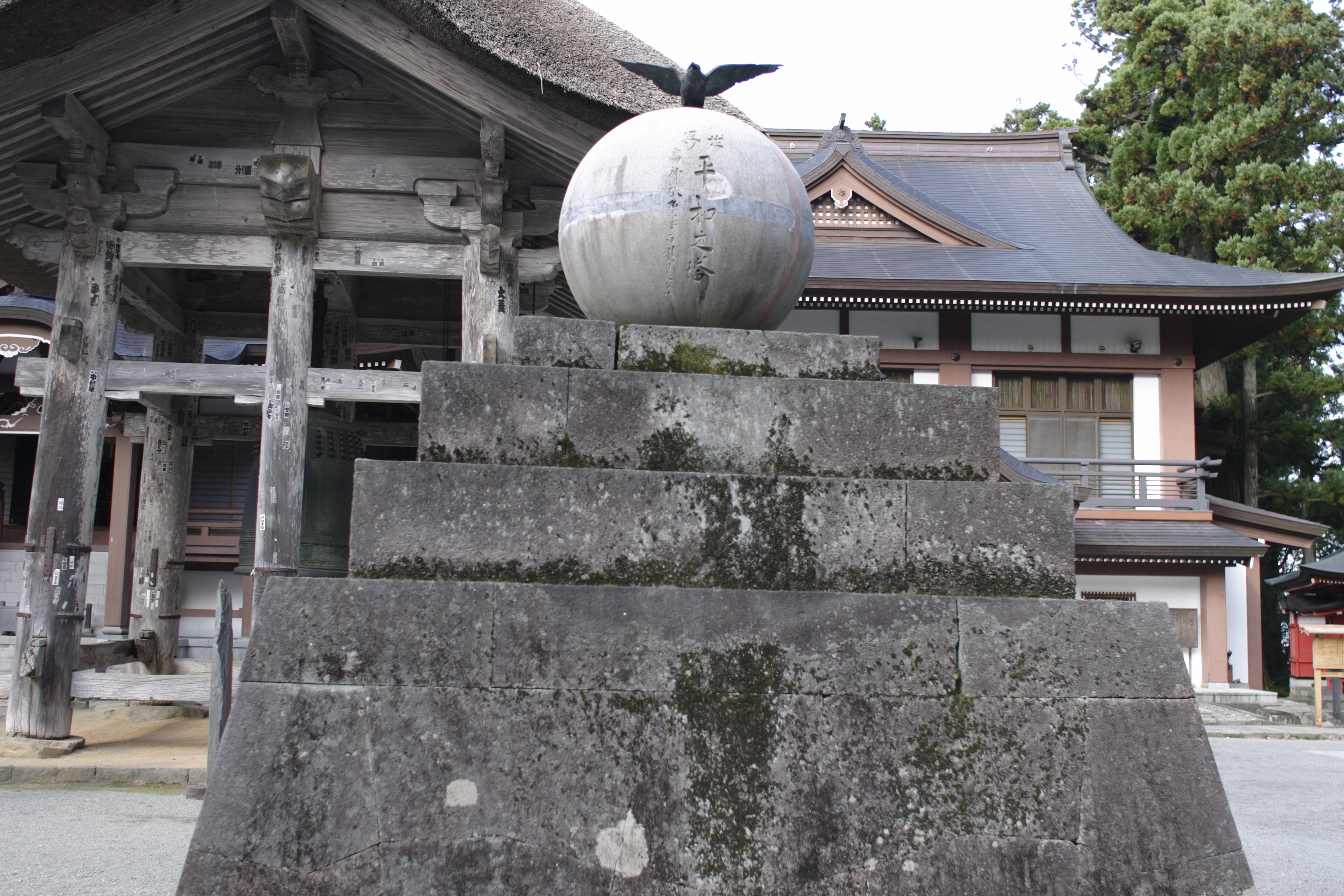 Gassan Dai-jinja on Mt. Haguro
In the case of Haguro Shugendō, Hagurosan Shugen Honshū (羽黒山修験本宗) is the postwar institutional continuation of Haguro Shugendō, based at Arasawa-ji Shōzenin (荒澤寺正善院) in Tsuruoka, Yamagata Prefecture. It was reconstituted after WWII under Japan's 1947 constitutional guarantee of religious freedom, inheriting the tradition maintained at Shōzenin through the Meiji disruption. According to the Shōzenin temple's website, the head temple of Haguro Shugendō was Jakkōji (寂光寺, now Dewa Sanzan Jinja) until the end of the Edo period. After the Meiji shinbutsu bunri, the functions of the head temple were transferred to the Tendai temple Arasawa-ji (荒澤寺) and its administrative office Shōzenin (正善院).
I visited Arasawa-ji Shōzenin in 2005. The attendant there were quite there pleasant and happy for visitors, but with limited time and halting university-level Japanese language skills it was not possible to learn anything about Shugendō in detail, despite my interest. I managed to connect later with members of the expatriate budō community in Japan who practiced Haguro Shugendō — it turns out our NYC Aikidō and Kempō instructor had no connection with Haguro Shugen Honshū.
Haguro Shugendō is an important cultural and philosophical aspect of Japanese culture in the Dewa area, which is near Aizu, and Mt. Haguro has been a pilgrimage destination for Aiki-jūjutsu practitioners since the time of Takeda Sokaku, who spent time there. Takeda's grandfather may have been a shugenja, and mikkyō chanting and breathing methods are important in some lines of Daitō-ryū. Early Daitō-ryū students such as Okuyama Yoshiji of Hakko-ryū and his student Sō Doshin, who founded Nippon Shorinji Kempō, also both spent time on Haguro. There are pictures years later of important Aikidōka such as Shirata Rinjirō and Saitō Morihiro performing enbu in front of Hachiko's shrine.
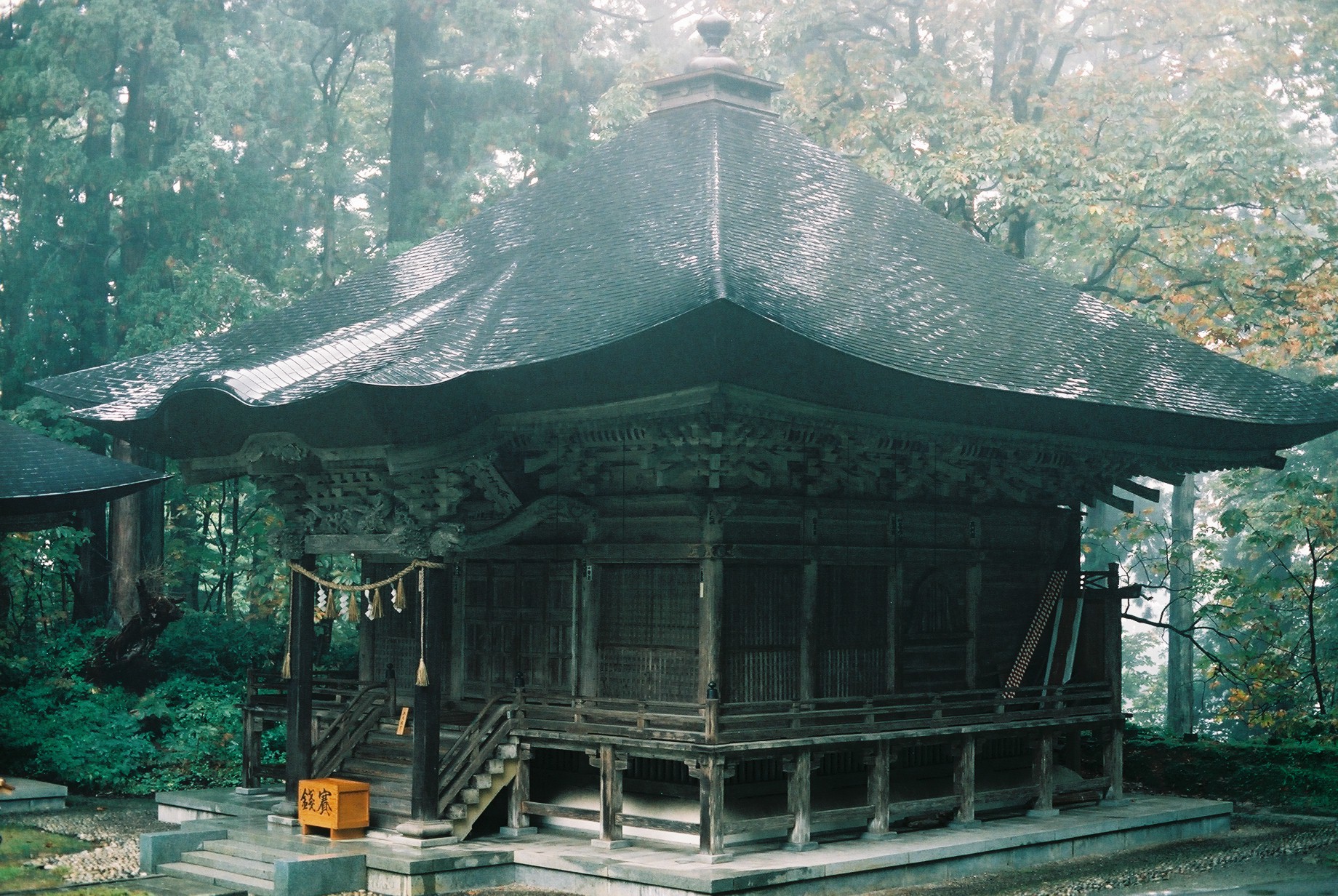 Hachiko-jinja [蜂子神社] at Dewa Sanzan
It is reasonable then to think that other Aikidōka, like our instructor and his Japanese friend in NYC, would find inspiration there. I myself have found Dewa Sanzan to be a wonderful, mysterious, place. That does not mean that every martial artist who visits Haguro, or even goes on a brief retreat there, has formal standing in Haguro Shugendō or is a shugenja or yamabushi.
Over the years, I have collected a small set of notes related to Haguro Shugendō history and provide some information below in the hopes it is useful to others:
- The bettō of Haguro during the transition was named 官田 (Kanda), who became the shrine priest (shashi) and took the name Haguro Uzen (羽黒羽前).
- The gūji (head priest) installed at Dewa when Buddhism and Shintō were split and Shugendō banned, was a Hirata-school nativist scholar named Nishikawa Sugao.
- Haguro Shugendō traces its founding to Nōjō Shōja (能除聖者), identified with Prince Hachiko (蜂子皇子, c. 542–641), son of Emperor Sushun. After his father's assassination by Soga no Umako in 592, the prince is said to have fled north and opened Mt. Haguro, Mt. Gassan, and Mt. Yudono as sacred sites for mountain practice. Hachiko is figured prominently in the entrance hall to the Gassan Dai Jinja.
- Akinomine (秋の峰, autumn peak entry) is a well-documented and important practice in Haguro Shugendō, and there are multiple retreats conducted by Buddhist-afilliated, Shintō-afilliated, and independent revival groups today.
- Other important founding figures in Shugendō, like En no Gyoja and Shōbō (聖宝) – Rigen Daishi (理源大師) – lived near Nara and Kyōto and are not associated to Dewa Sanzan or Haguro Shugendō.
- For example, Ono-ryū (小野流) is the line of Shingon practice said to founded by Shōbō at Daigo-ji on Mt. Kasatori — not the family name of a line of Shugendō practice in Dewa.
- Saigō Tanomo (1830–1903) was the chief retainer (karō) of the Aizu domain and a Shintō priest at Nikkō Tōshōgū after the domain's defeat in the Boshin War. No mainstream source describes him as being a Shugendō practitioner.
End Notes
- I provide the above as I was once provided incorrect information, when I was studying modern combative methods derived from Aikidō and was very interested in Shugendō.
- [ 2026 ] Takeda Sōkaku is known to have made pilgrimage to Haguro and studied Shugendō kuji-goshinbō and other skills from Nakagawa Man'nojō.
References
Some references can be found below.
- Pranin, Stanley. "Saigō Tanomo and Takeda Sokaku." Aiki News / Aikido Journal, various issues. [Documents the Saigō Tanomo connection to Takeda Sokaku and the claim that Saigō was connected to Shugendō, although Saigō Tanomo is now believed to not have practiced budō.]
- Miyake Hitoshi (宮家準). "近現代の山岳宗教と修験道 ― 神仏分離令と神道指令への対応を中心に" [Mountain Religion and Shugendō in the Modern Era: Responses to the Shinbutsu Bunri Edicts and the Shintō Directive]. Meiji Seitoku Kinen Gakkai Kiyō (明治聖徳記念学会紀要), restored issue no. 43, November 2006, pp. 42–61.
- Sekimori, Gaynor. "Paper Fowl and Wooden Fish: The Separation of Kami and Buddha Worship in Haguro Shugendō, 1869–1875." Japanese Journal of Religious Studies 32, no. 2 (2005): 197–234.
- Sekimori, Gaynor. "Haguro Shugendō and the Separation of Buddha and Kami Worship (shinbutsu bunri), 1868–1890." PhD diss., University of Cambridge, 2000.
- Earhart, H. Byron. A Religious Study of the Mount Haguro Sect of Shugendō. Tokyo: Sophia University, 1970
- Blacker, Carmen. The Catalpa Bow: A Study of Shamanistic Practices in Japan. London: George Allen & Unwin, 1975.
- Miyake Hitoshi. Shugendō: Essays on the Structure of Japanese Folk Religion. Edited by H. Byron Earhart. Ann Arbor: University of Michigan Center for Japanese Studies, 2001.
- Keene, Donald. Emperor of Japan: Meiji and His World, 1852–1912. New York: Columbia University Press, 2002.
- Shugendō: Essays on the Structure of Japanese Folk Religion, ed. H. Byron Earhart (Ann Arbor: University of Michigan Center for Japanese Studies, 2001)